
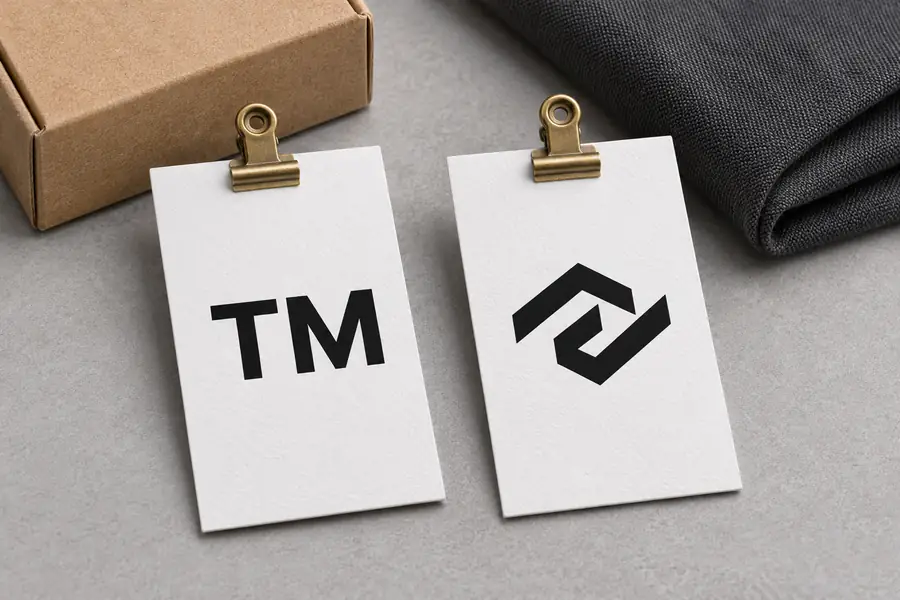
What the application represents
Form TM-A distinguishes a word mark in standard characters from a device mark, which can include a logo, label or monogram. A word-mark application focuses on the wording; a device application represents the visual sign submitted.
A logo containing a name should not be treated as a substitute for every possible way of protecting that name. Equally, a word-mark application does not assess the originality or ownership of your artwork.
Official reference: IPIndia: mark categories in Form TM-A
Use your real branding plans to decide
If the name is settled but the artwork will probably change, discuss the name separately before selecting a filing. If an emblem is how people recognise your business, that artwork deserves its own attention.
Place your packaging, app icon, shop sign and invoices next to each other. Are customers seeing a consistent name, a consistent symbol, or both? This exercise identifies what you actually use instead of choosing the cheapest-looking option.
- Identify the spelling you expect to retain.
- Identify any independently recognisable symbol.
- Flag artwork likely to change soon.
- Check the name and visual elements for earlier conflicts.
| Branding fact | Discussion to have | Question still to assess |
|---|---|---|
| Stable wording; artwork likely to change | Assess the wording separately | Distinctiveness, earlier rights and goods/services. |
| Recognisable emblem used on its own | Assess the visual sign separately | Design similarity, ownership and intended scope. |
| Name and emblem both important | Compare separate and combined filings | What each application represents and what it costs. |
| Main wording describes the product | Review the wording concern explicitly | Whether the actual sign meets registrability requirements. |
Separate applications are a scope decision
Filing the name and the logo separately may suit some brands, but it also creates separate mark applications and costs. The decision should follow the importance, distinctiveness and intended use of each sign.
Section 17 addresses composite marks and their parts. Protection for a registration taken as a whole does not automatically give exclusive rights over every common or non-distinctive element within it. Discuss the actual sign and record rather than assuming that one application protects everything.
Official reference: IPIndia: Trade Marks Act, Section 17
Work through a founder's branding decision
Illustrative scenario: a founder is launching a kurti label. The same name will appear on garment tags, invoices and a website, but the decorative emblem may change after the first collection. The practical discussion starts with the settled name and treats unfinished artwork as an unresolved filing choice.
If customers also recognise a distinctive emblem on its own, that is a reason to assess the emblem separately. If they see only a combined label, review the combined sign as well. None of these observations establishes registrability: the actual wording, artwork, earlier rights and goods/services still need assessment.
- Stable name, changing artwork: discuss whether a name filing should be assessed first.
- Distinctive symbol used without the name: consider a separate visual-sign assessment.
- Name and symbol both central to the brand: compare separate applications and their scope.
- Generic or descriptive wording: a decorative logo does not automatically settle the wording issue.
Official reference: IPIndia: distinctiveness and earlier-rights grounds, Sections 9 and 11
Compare the search scope as well as the artwork
For wording, examine relevant earlier names, important parts and similar sounds. For a visual sign, consider its recognisable design features and any wording inside it. A changed font or a small decorative element is not a reliable answer to an earlier-name concern.
Prepare a simple asset sheet showing the name alone, symbol alone and complete label as they will appear on products or services. Ask the reviewer to identify which signs have been searched and what remains uncertain. This makes the search discussion useful even when the final filing plan changes.
Official reference: IPIndia: official trademark-search entry points
Get the artwork rights in order
If a freelancer or agency created your logo, keep the design brief, final files and relevant written agreement. Check who can reproduce, modify and use the artwork before building the brand around it.
Trademark and copyright questions can overlap for a logo. Review them as separate questions: brand identification on one side, ownership of the creative work on the other.
Check third-party icons, stock artwork and typeface licences used in the design. A delivered image file is not, by itself, an explanation of the permissions behind every element. Ask the designer to identify those elements and the relevant rights before approving the final mark.
Compare the filing plan with the places customers see the brand
Look at a garment label, marketplace thumbnail, website header and invoice at their real sizes. If the emblem is too small to be recognisable in one setting, the name may be doing more of the identification work there. If an icon appears without text on another product, include that use in the brief. This is a practical way to describe brand assets to the person assessing them.
Record the number of marks and classes in the proposed plan before approving the quote. Separate applications can provide a clearer record of the separate signs being assessed, but they also create separate fees and records to maintain. A combined application should be understood as the actual representation filed rather than a bargain that automatically grants separate rights in every component.
Do not resolve a serious search concern by changing the font alone. Give the search reviewer the name, the emblem and the full label, and ask which concern the redesign addresses. If the answer depends on the wording or overlapping goods/services, decorative changes may leave that concern unresolved.
- Show the real product and service uses, including small-format use.
- Identify the assets likely to survive a redesign.
- Ask what each proposed application represents.
- Keep the final filing plan, artwork version and search scope together.
Keep the filed representation in your brand records
When the application is ready, identify one exact spelling or artwork version for each mark. Keep the approved representation next to the application and fee estimate so that everyone knows what is being submitted.
If the brand changes after filing, compare the new sign with the filed record before treating it as covered or casually replacing the image. Seek a focused assessment of the changed name or artwork and the appropriate route. A registration taken as a whole is not a promise of protection for every future redesign.
COMMON QUESTIONS
Questions about prepare to file.
Is a word mark always better than a logo mark?
No. The right choice depends on the actual name, artwork, recognisable elements, planned use and available budget.
Link to this answerDoes registering a logo automatically register its words separately?
Do not assume that. The representation, distinctiveness and rules on parts of a composite mark matter.
Link to this answerShould I file both?
Consider each mark's importance and use, then compare the scope and cost of separate applications. It is not a universal requirement.
Link to this answerCan I change my logo after filing?
A changed sign should be compared with the filed representation before assuming it is covered or replacing it in the record. Assess the nature of the change and the appropriate procedure; renewal is not a general redesign mechanism.
Link to this answerDoes a word-mark filing give me ownership of a font or artwork?
No. A word-mark application identifies wording in standard characters. Font licences, artwork ownership and permission to use third-party design elements are separate questions.
Link to this answerDoes a different logo make a similar name safe?
Do not assume so. Earlier rights, the wording, the overall sign and relevant goods or services need assessment. A font change or small design addition does not by itself answer a confusion concern.
Link to this answerOfficial sources & verification
Sources checked 5 October 2026. Check the linked rule, record or fee schedule for your application.
Source checks are editorial checks, rather than approval by IP India or a professional opinion on your facts. Report an issue in this guide.